 Rwanda vs Uganda Gorilla Trekking
Home › Guides › Mountain Gorillas: Where to See Them in Rwanda and Uganda
Mountain Gorillas: Where to See Them in Rwanda and Uganda
Around 1,063 mountain gorillas survive in the wild, split between Uganda's Bwindi Impenetrable National Park and the Virunga Massif parks of Rwanda, Uganda and DR Congo. The only way a traveller sees them is a guided permit trek in Volcanoes National Park in Rwanda or Bwindi and Mgahinga in Uganda.
Quick answer How many mountain gorillas are left and where can you see them?
An estimated 1,063 mountain gorillas live in the wild, 604 of them in the Virunga Massif and 459 in the Bwindi-Sarambwe area after the 2018 census. You can visit them in Volcanoes National Park in Rwanda or in Bwindi and Mgahinga in Uganda. A Rwanda permit costs $1,500 per person per day according to the RDB portal.
Key takeaways
- Compare the two countries on our rwanda vs uganda gorilla trekking homepage
- Book a short 1 Day Rwanda Gorilla Trekking Tour In The Volcanoes National Park from Kigali
- Cross the border easily with a 2 Day Gorilla Trekking Bwindi From Kigali trip
- See the 5 Day Uganda Gorilla and Chimpanzee Safari for a longer trip
Are Mountain Gorillas Going Extinct?
They are not.
The first thing most travellers get wrong is the trend. Mountain gorillas were once critically endangered, but the IUCN moved them to endangered back in 2008. The most recent counts show growth in both populations.
What the censuses show
The Virunga Massif count rose from 480 to 604 over five years, with the census published in 2018. The 2018 Bwindi-Sarambwe census added 459, bringing the total to 1,063. Censuses run every 5 to 10 years through the International Gorilla Conservation Programme.
The IUCN still lists the subspecies as endangered, so the work continues. But for a traveller the picture is simple. This is one of the few great ape populations whose numbers are going up, and every permit you buy funds that work.
| Population | Count | Source |
|---|---|---|
| Virunga Massif (Volcanoes, Mgahinga, Virunga) | 604 | 2018 census, Dian Fossey Gorilla Fund |
| Bwindi-Sarambwe | 459 | 2018 census, Dian Fossey Gorilla Fund |
| World total | 1,063 | 2018 census, Dian Fossey Gorilla Fund |
How many mountain gorillas are left?
About 1,063 mountain gorillas are left in the wild, in two isolated populations.
The number is small enough that every family matters. Visit Rwanda puts the wild population at approximately 1,000, with 604 of those in the Virunga Massif, and the full census total after Bwindi was counted sits at 1,063.
Where the two populations live
One population lives in the Virunga Mountains, spread across Mgahinga Gorilla National Park in Uganda, Volcanoes National Park in Rwanda and Virunga National Park in DR Congo. The other lives in Uganda's Bwindi Impenetrable National Park. The two groups never meet, so they are managed as separate populations.
For your trek this means three practical gateways. Kigali serves Volcanoes in Rwanda. Entebbe and Kigali both serve Bwindi in Uganda, since Bwindi sits close to the Rwandan border.
Mgahinga, the smallest of the parks, shares the same volcanic range as Volcanoes.
| Park | Country | Access point |
|---|---|---|
| Volcanoes National Park | Rwanda | Kigali, about 90 minutes to Musanze area attractions by road on the caves route |
| Bwindi Impenetrable National Park | Uganda | Entebbe, or Kigali via the Katuna (Gatuna) or Chanika (Cyanika) border posts |
| Mgahinga Gorilla National Park | Uganda | Kisoro District, via Chanika (Cyanika) from Rwanda |
Why counting matters to you
Permit numbers follow the gorilla numbers. Rwanda issues only 96 gorilla permits per day, eight per troop, according to Visit Rwanda. Fewer gorillas per park would mean fewer permits, so the growth you read about in the census is also why permits exist at all.
Source: Visit Rwanda.
Where should you see them: Rwanda or Uganda?
Rwanda offers the shortest access from Kigali at a higher permit price of $1,500 per person per day, while Uganda offers Bwindi's larger population and lower trip prices.
Both countries host habituated families you can visit. The choice comes down to time, budget and what else you want from the trip.
The practical comparison
Rwanda's Volcanoes National Park sits closest to an international airport, which is why a one-day trek from Kigali is possible. Uganda's Bwindi has the single biggest share of the world total. Border posts connect the two parks directly, so many travellers base in Kigali and trek in Uganda.
Our tour prices show the gap. A 12-hour day trip in Rwanda runs $342 per person plus the permit bought separately. Three-day Uganda treks here cost $1,860 to $2,600 per person.
| Factor | Rwanda (Volcanoes) | Uganda (Bwindi and Mgahinga) |
|---|---|---|
| Permit for a foreign non-resident | $1,500 per person per day | not stated on the sources read for this page |
| Access from Kigali | Same-day trek possible | Border via Katuna (Gatuna) or Chanika (Cyanika) |
| Park setting | Dormant volcanoes of the Virunga Massif | Bwindi Impenetrable forest and the Virunga volcanoes at Mgahinga |
| Shortest trip here | 12 hours | 3 days |
Visas if you visit both
Irembo, the Rwanda visa portal, lists the East Africa Tourist Visa at $100, valid 3 months for Rwanda, Uganda and Kenya. A single-entry V1 Holiday visa is $50 and a multiple-entry visa is $70. If you plan to cross the border for Uganda's parks, the East Africa Tourist Visa usually covers the whole trip.
Sources: Visit Rwanda, Irembo.
Are mountain gorillas friendly to humans?
Habituated families are calm around visitors, and gorillas are generally calm unless disturbed, but they are wild animals with strict rules to keep it that way.
The families you visit have gone through years of habituation. Tourism has habituated most mountain gorillas under strict sanitation protocols and a no-touching rule, according to National Geographic.
The rules that keep visits safe
Rwanda's Development Board says expert guides give a pre-trek briefing on the protocols, and visitors must keep 7 metres, about 22 feet, from the gorillas. If a gorilla vocalizes at you, stand still, look away and follow your guide's directions. Viewing time is limited to one hour and each group takes a maximum of 8 visitors.
You must not visit if you are sick with a cold, flu or other contagious illness, since gorillas share much of our biology. Keep your voice low, avoid rapid movements, do not litter and do not spit in the park. The Gorilla Friendly Pledge asks visitors to wear a facemask at all times and leave no waste behind.
| Rule | Detail |
|---|---|
| Minimum age | 15 years for gorilla tracking |
| Group size | Maximum 8 visitors per gorilla group |
| Distance | 7 metres, about 22 feet |
| Viewing time | One hour |
| Photography | No flash photography, as stated by the Uganda Wildlife Authority for Uganda |
Sources: Rwanda Development Board, Visit Rwanda, Uganda Wildlife Authority.
Are mountain gorillas dangerous?
Attacks on visitors are not part of any source read for this page, and habituated groups are generally calm unless disturbed.
The honest answer is that these are powerful wild animals, which is exactly why the rules exist. National Geographic describes troops as generally calm unless disturbed, and the silverback's job is to keep the family safe.
What actually happens on a trek
The common experience is watching a family feed, rest and play while a guide explains behaviour. Gorillas have 16 different types of call, so your guide may interpret vocalisations during the hour. If a gorilla charges or vocalizes at you, the drilled response is to stand still, look away and follow your guide.
A sick animal is a bigger risk to them than to you. That is why visitors with a cold or flu are turned away. It is extremely rare for visitors not to see gorillas on their trek, according to SafariBookings, and Rwanda even refunds 75 percent of the tracking fee if your group tracks all day without a contact.
Source: Rwanda Development Board.
Why are mountain gorillas becoming extinct?
They are not heading for extinction, but they remain endangered because habitat is limited, populations are isolated and human pressure around the parks stays high.
The threats have not disappeared even though numbers are rising. World Wildlife Fund says the subspecies is recovering thanks to global conservation but still faces threats.
Why the risk remains
Both populations are small and isolated from each other, which limits genetic exchange. About half of all mountain gorillas live in the forests of the Virunga mountains at elevations between 8,000 and 13,000 feet, a habitat with a fixed size. Groups of two to 40 animals, each led by a dominant silverback, need that forest to survive.
The funding model is part of the answer. Community-owned lodges such as Sabyinyo Silverback Lodge in Rwanda and Clouds Mountain Gorilla Lodge near Bwindi give people around the parks a stake in the gorillas' future.
Source: Visit Rwanda.
Tours That Fit
Trips that get you to the gorillas in one or two countries.
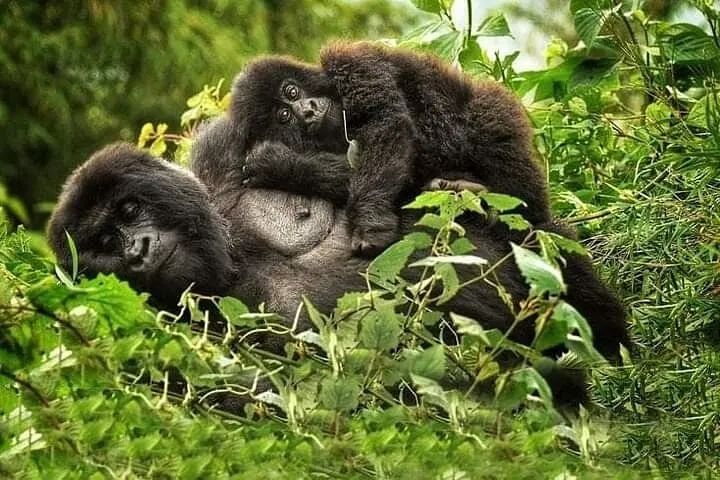
1 Day Rwanda Gorilla Trekking Tour In The Volcanoes National Park
A private 12 hour Kigali day trek with 4x4 transport and meals included, but the mandatory gorilla permit is paid for separately.
- Cancellation
- Free cancellation 24h
- Operator
- Universal Ventures
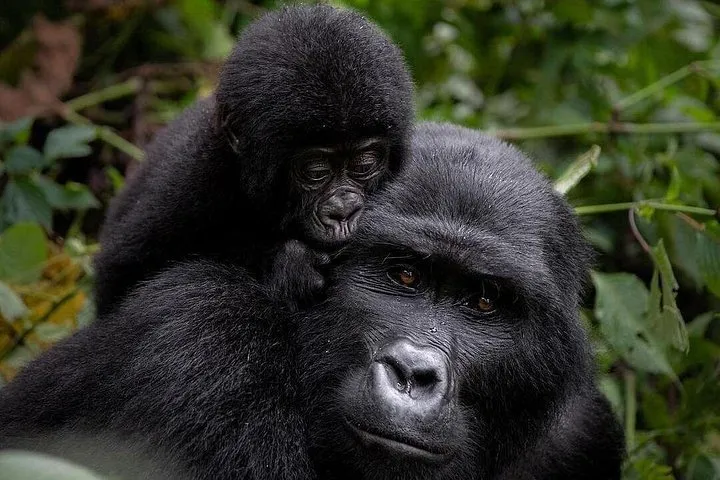
3 Days gorilla trekking Safari tour in Uganda
Private three day Uganda gorilla safari with the permit, two nights lodging, meals, a Batwa tour and a Lake Bunyonyi canoe ride for $2600 per person.
- Cancellation
- Free cancellation 24h
- Operator
- Dav Safaris
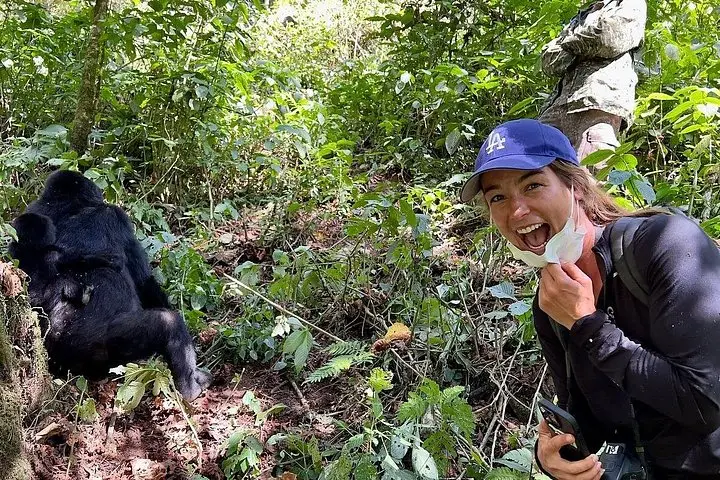
3 Day Uganda Gorilla Trekking and Batwa Pygmies Experience
A private 3 day Uganda gorilla trek with a Batwa cultural experience, permit of $800 included in the $1860 price, from Entebbe or Kampala.
- Cancellation
- Full refund 6 days ahead, 50% between 2 and 6 days, no refund within 2 days
- Operator
- Eco Adventure Safaris
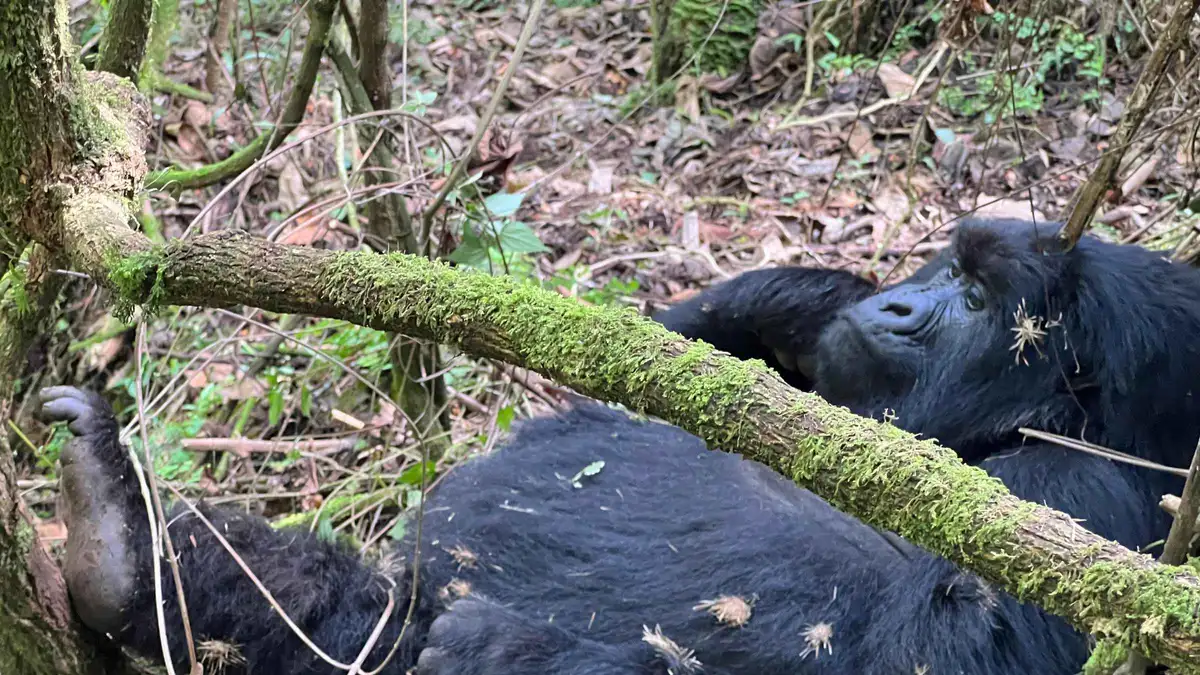
4-Day Gorilla Trekking Tour in Rwanda & Uganda
Four days across both countries with the Uganda Bwindi gorilla permit and Rwanda golden monkey permit included in the $2,500 price.
- Cancellation
- Free cancellation 24h
- Operator
- Safari 2 Gorilla Tours Company Limited
Which tour should you book?
Book the 1-day Rwanda trip if you are short on time, a 3-day Uganda trek for the fuller forest experience, or the 4-day combined trip if you want both countries.
Our tours cover all three routes, and every one carries free cancellation or a stated refund window.
The options side by side
The 1 Day Rwanda Gorilla Trekking Tour In The Volcanoes National Park by Universal Ventures costs $342 per person for 12 hours, rated 4.9 from 83 reviews, with the gorilla permit bought separately. In Uganda, the 3 Days gorilla trekking Safari tour in Uganda by Dav Safaris costs $2,600 per person, rated 5 from 236 reviews, with free cancellation 24h ahead. The 3 Day Uganda Gorilla Trekking and Batwa Pygmies Experience by Eco Adventure Safaris costs $1,860 per person and adds the Batwa community visit, with a full refund 6 days ahead, 50 percent between 2 and 6 days and no refund within 2 days.
The 4-Day Gorilla Trekking Tour in Rwanda & Uganda by Safari 2 Gorilla Tours Company Limited costs $2,500 per person and covers both countries with free cancellation 24h ahead.
| Tour | Price | Duration | Cancellation |
|---|---|---|---|
| 1 Day Rwanda Gorilla Trekking Tour In The Volcanoes National Park | $342 per person | 12 hours | Free cancellation 24h, permit bought separately |
| 3 Days gorilla trekking Safari tour in Uganda | $2,600 per person | 3 days | Free cancellation 24h |
| 3 Day Uganda Gorilla Trekking and Batwa Pygmies Experience | $1,860 per person | 3 days | Full refund 6 days ahead, 50% between 2 and 6 days, none within 2 days |
| 4-Day Gorilla Trekking Tour in Rwanda & Uganda | $2,500 per person | 4 days | Free cancellation 24h |
Money for the border and the extras
If your tour crosses into Uganda, check the visa first. Irembo lists the East Africa Tourist Visa at $100 for 3 months covering Rwanda, Uganda and Kenya, with a single-entry visa at $50. Add-on activities around Volcanoes are priced by the RDB portal, for example golden monkey tracking at $100 for foreigners and the Dian Fossey tomb hike at $75 for foreigners.
Permits sell out, and Rwanda allocates them first come first served, so reserve your tour and permit together early. Rwanda's advance booking rules let you pay 40 to 99 percent of the fee to hold a slot, with the balance due before 30 days to confirm.
Sources: Irembo, Rwanda Development Board, Rwanda Development Board.
What do mountain gorillas eat?
They are herbivores that spend most of the day feeding on forest vegetation, and a group can roam a home range of 0.75 to 16 square miles to find it.
Diet shapes your trek more than you might expect. Because the animals move constantly to feed, the walk to reach them can be long.
Why feeding means walking
National Geographic describes troops occupying a home range of 0.75 to 16 square miles. Visit Rwanda says hikes in Volcanoes last anything from 30 minutes to four or more hours at altitudes of 2,500m to 4,000m, and a separate itinerary page puts tracking at between 90 minutes and the whole morning depending on the family assigned. Come prepared.
The Gorilla Friendly Pledge recommends hiking boots or sturdy shoes, waterproof clothing, long sleeves and gloves. Gumboots, raincoats and gloves can be hired at the park headquarters according to the RDB portal, and porters are available to carry backpacks and help on the route.
Source: Visit Rwanda.
What's the difference between a mountain gorilla and a regular gorilla?
The mountain gorilla is a subspecies of eastern gorilla, and it is larger and shaggier than the lowland forms, with adult males reaching 1.61 to 1.71 m standing height and 120 to 191 kg.
The main difference is habitat and build. Mountain gorillas live at high altitude in cool, wet forests, which explains the thick fur you will see on your trek.
What you will notice on trek day
A big silverback is heavy. Males reach 120 to 191 kg and stand 1.61 to 1.71 m tall, while females weigh 70 to 98 kg. Newborns weigh about four pounds and ride on their mothers' backs from four months old for two to three years, so a family visit often includes young gorillas.
You share about 98 percent of your DNA with them, according to WWF. Gorillas can live over 40 years in the wild. A whole family shares its day in view of your group for just one hour, which is why guides keep the pace calm and the distance at 7 metres.
How can we help mountain gorillas?
The most direct help for a traveller is buying a permit, since 10 percent of Rwanda's permit revenue goes to local communities and permit fees fund the parks.
Every permit funds conservation directly. Tourism is habituating most mountain gorillas under strict protocols, and the money behind it pays rangers, research and community projects.
Where your money goes on our side
Rwanda raised its permit price from $750 to $1,500 in a 2017 RDB notice and doubled the community revenue share from 5 to 10 percent at the same time. The Dian Fossey Gorilla Fund's Ellen DeGeneres Campus, a $15 million project that opened in 2022 near Volcanoes National Park, welcomes visitors every day from 9 a.m. until 5 p.m. with a suggested $25 donation per adult for the self-guided tour. On the trek itself, following the rules is part of the help.
Keep 7 metres, wear a facemask, stay home if you are sick and carry out everything you carry in. The census growth you read about at the top of this page is the result of exactly this funding and discipline.
Source: Visit Rwanda.
How does the trek day work?
Report at 07:00, get a briefing, trek for 30 minutes to four or more hours, then spend one hour with the family.
The day is structured and predictable, which helps you plan flights and lodging around it.
The timeline in Rwanda
Report to the Visitor Information centre and the briefing at the RDB offices in Kinigi at 7:00 AM on the trek day. Twelve gorilla families in Volcanoes National Park are open to tourists, each with at least one silverback, and 96 permits are issued daily. A day is just enough for a quick tour to see the mountain gorillas in Volcanoes National Park, which is what the 12-hour trip from Kigali is built on.
Stay near Musanze or Kinigi the night before, since the 07:00 start leaves no room for a long morning drive. Porters and hired gear are available at headquarters, and no fee for porters is printed on the official pages.
Sources: Rwanda Development Board, Visit Rwanda.
Mountain gorilla questions travellers ask
How many mountain gorillas are left?
About 1,063, with 604 in the Virunga Massif and 459 in Bwindi-Sarambwe after the 2018 census. See the rwanda vs uganda gorilla trekking homepage for how that splits between the two countries.
Are mountain gorillas friendly to humans?
Habituated families are calm around visitors and generally calm unless disturbed. You keep 7 metres, wear a facemask and follow your guide, as the RDB portal states for Volcanoes National Park.
Why are mountain gorillas becoming extinct?
They are not. The population grew 26.3 percent over the past seven years, though the IUCN still lists them as endangered because both populations are small and isolated.
What's the difference between a mountain gorilla and a regular gorilla?
Mountain gorillas are a high-altitude subspecies with thicker fur. Males reach 1.61 to 1.71 m standing height and 120 to 191 kg.
Are mountain gorillas dangerous?
Habituated troops are described as generally calm unless disturbed. If a gorilla vocalizes at you, stand still, look away and follow your guide's directions.
What do mountain gorillas eat?
They feed on forest vegetation and move constantly to find it, which is why treks run from 30 minutes to four or more hours at altitudes of 2,500m to 4,000m.
Why are mountain gorillas important?
They anchor a conservation economy.
How can we help mountain gorillas?
Buy a permit, follow the trek rules and support community-linked lodges such as Sabyinyo Silverback Lodge in Rwanda and Clouds Mountain Gorilla Lodge near Bwindi.
More Guides
- Best Time to Visit Uganda for Gorilla Trekking
Plan the best time to visit Uganda in 2027. Two dry seasons, June to September and December to February, See the month table and book.
- Bwindi Impenetrable National Park: Gorilla Trekking in Uganda Compared With Rwanda
Plan Bwindi in 2027: 4 sectors, treks of 2 to 7 hours, permits and how Uganda compares with Rwanda. See tours and book.
- East Africa Tourist Visa for Gorilla Trekking in Rwanda and Uganda
The East Africa Tourist Visa covers Rwanda, Uganda and Kenya for 90 days in 2027 on one $100 visa. See how to apply for your gorilla trek.