 Rwanda vs Uganda Gorilla Trekking
Home › Guides › Best Time to Visit Uganda for Gorilla Trekking
Best Time to Visit Uganda for Gorilla Trekking
The best time to visit Uganda for gorilla trekking is June to September and December to February, when the dry seasons make Bwindi's trails firmer and trekking windows more reliable. Uganda treks last 2 to 7 hours with 60 minutes with the gorillas, and April, May and November bring cheaper low-season permits.
Quick answer Best months and seasons for gorilla trekking in Uganda
The best time to visit Uganda is June to September and December to February, the two dry seasons, with temperatures of 75°F to 86°F. For gorilla trekking specifically the best windows are June to August and December to February. Rain is still possible in Bwindi at any time of year.
Key takeaways
- Compare permits and trek lengths in our rwanda vs uganda gorilla trekking guide
- See a 3 day gorilla trekking safari tour in Uganda for peak season plans
- Read how the 3 day Uganda gorilla trekking and Batwa Pygmies experience works
- Check the 2 day gorilla trekking Bwindi from Kigali option for short trips
What is the best month to go to Uganda?
June, July and August are the best months, with January and February close behind.
Uganda has two dry seasons and two wet seasons. The dry seasons bring firmer trails, easier wildlife viewing and the steadiest conditions for a gorilla trek in Bwindi or Mgahinga.
The two dry seasons
The dry season runs June to September and December to February, and this is the best time for game viewing with steady temperatures of 75°F to 86°F. The best gorilla trekking windows are December to February and June to August. June averages around 81°F, with green landscapes and thinning vegetation that improve Big 5 spotting. One rating scheme puts it this way: January, February, June and July are dry and best, August and December are very good, March and September are good but rainy, and April, May, October and November are least best.
| Months | Season | Trekking conditions |
|---|---|---|
| June to September | Dry season | Firm trails, best gorilla trekking window June to August |
| December to February | Dry season | Second best gorilla trekking window |
| March to May | Wet season | Lush parks but bad roads and wet trails |
| October to November | Wet season | Rain, fewer crowds, low-season permits in November |
What Does Each Month Mean for a Gorilla Trek in Uganda?
Uganda is good to visit all year for gorillas, but June to September and December to February give the easiest trekking conditions.
Temperatures barely move across the year, with only 1 to 4 degrees Celsius between the warmest and coolest months. What changes is rain, trail condition and price.
Month by month
Rain can fall in any month in the gorilla parks. Bwindi and Mgahinga sit between roughly 1,160 and 2,600 metres and get more rain than the national average, so pack for wet even in July. Kidepo Valley runs on a different clock, with one long dry season from July to February and one wet season from March to June.
| Month | Season | What it is like for a gorilla trip |
|---|---|---|
| January | Dry | Dry and best, firm trails |
| February | Dry | Dry and best, end of the window |
| March | Wet | Long rains start, good for birdwatching, Queen Elizabeth National Park has 1000 bird species |
| April | Wet | Wettest month, worst Bwindi trail conditions, cheapest permits and rooms |
| May | Wet | Rain eases, gorillas at lower altitudes, low-season permits |
| June | Dry | Around 81°F, quiet early June before high-season rates, best window opens |
| July | Dry | Dry and best, peak trekking month |
| August | Dry | Very good, still in the best window |
| September | Dry to wet | Good but rainy, wildlife stays easy to find |
| October | Wet | Rain returns, vegetation stays low so wildlife is still good |
| November | Wet | Rain, migratory birds arrive, low-season permits |
| December | Dry | Very good, high season starts |
Which month is the rainy season in Uganda?
The rainy seasons run March to May and October to November.
The long rains start in March and run to May. A shorter wet spell sits in October and November. Gorilla permits are available throughout the year, so you can trek in the wet season if you plan for it.
How rain affects your trek day
March to May is the wet season: parks are lush, animals give birth, but roads can be in bad condition. April is the worst month for Bwindi trail conditions and for washouts on the Kampala to Bwindi road, and the drive from Kigali through the Katuna border with a lunch stop in Kabale takes about 4 to 5 hours in any season. Rain also moves the gorillas.
Mountain gorillas stay at lower elevations in the wet season and climb higher in the dry season in search of food, so a wet-season trek can involve less climbing to reach them. Uganda gorilla treks last between 2 to 7 hours with 60 minutes of observation. Bwindi has four sectors, Buhoma, Ruhija, Rushaga and Nkuringo, and Mgahinga issues about 8 permits per day.
Source: Uganda Wildlife Authority.
Tours That Fit
A three day Uganda trip fits the dry season windows and covers the permit and the drive.
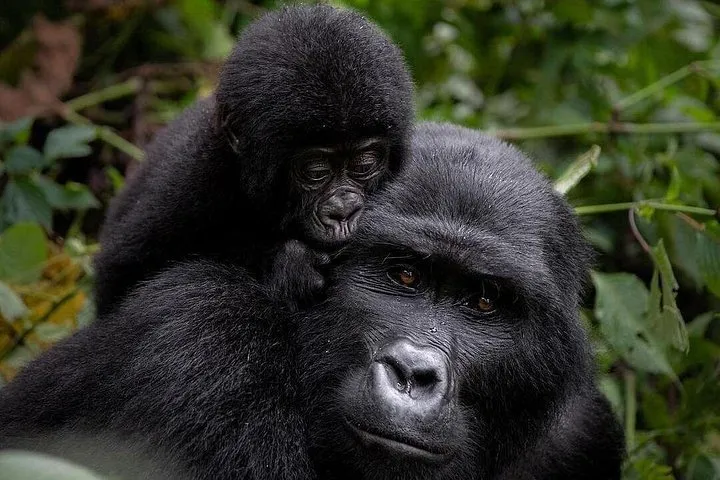
3 Days gorilla trekking Safari tour in Uganda
Private three day Uganda gorilla safari with the permit, two nights lodging, meals, a Batwa tour and a Lake Bunyonyi canoe ride for $2600 per person.
- Cancellation
- Free cancellation 24h
- Operator
- Dav Safaris
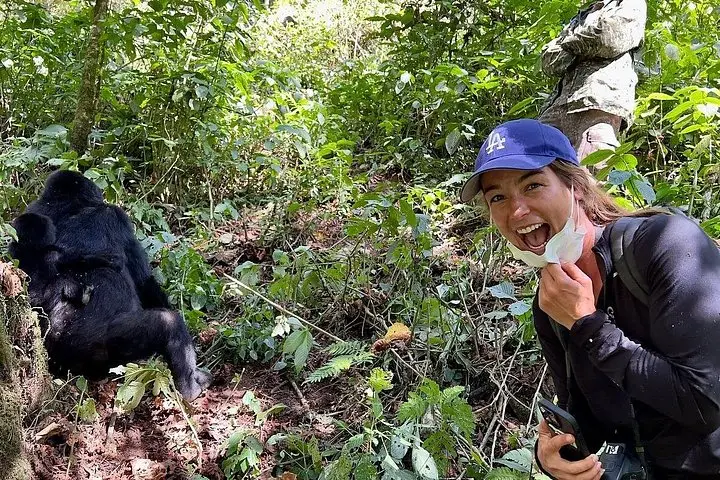
3 Day Uganda Gorilla Trekking and Batwa Pygmies Experience
A private 3 day Uganda gorilla trek with a Batwa cultural experience, permit of $800 included in the $1860 price, from Entebbe or Kampala.
- Cancellation
- Full refund 6 days ahead, 50% between 2 and 6 days, no refund within 2 days
- Operator
- Eco Adventure Safaris
When is the cheapest time for gorilla permits in Uganda?
April, May and November are the low-season permit months in Uganda.
Uganda prices gorilla permits seasonally, which is one of the big differences in a rwanda vs uganda gorilla trekking decision. Rwanda does not discount its permits by season in the same way.
Low-season permits and the no-reschedule caveat
The low-season permit months are April, May and November, and low-season permits cannot be rescheduled. That is the trade: you pay less, but a missed date is a lost permit, so only book these months when your travel dates are certain. For comparison, Rwanda charges US $1,500 per person per day for a gorilla permit according to Visit Rwanda, and a Rwandan low-season discount of 30% off permits from November to May exists but only applies to combined trips that include stays and paid activities in Akagera and/or Nyungwe.
UWA has announced new rates from 1 January 2027, so check the current tariff when you book.
| Timing | Uganda | Rwanda |
|---|---|---|
| High season | Peak permit pricing | US $1,500 per person per day per Visit Rwanda |
| Low season | April, May and November cheaper permits, cannot be rescheduled | 30% discount only with a combined Akagera and/or Nyungwe trip, November to May |
Wet season value beyond the permit
April is the wettest month but it brings affordable accommodation, easier permit booking and gorillas at lower altitudes. Early June is the quiet alternative before high-season rates start, with drier trails than April and May. Our current Uganda trip prices are fixed by operator, not by season.
The 3 Days gorilla trekking Safari tour in Uganda with Dav Safaris costs $2,600 per person, and the 3 Day Uganda Gorilla Trekking and Batwa Pygmies Experience with Eco Adventure Safaris costs $1,860 per person.
Sources: Visit Rwanda, Rwanda Development Board.
Do gorillas become easier to see in the dry season?
Season does not decide how long your trek takes, the gorillas do.
Dry season makes trails easier, but the distance to the gorillas is set by where the group slept the night before, not by the month you visit.
Trek duration in practice
A dry-season trek can be six hours uphill and a wet-season one forty minutes. Treks can last from 30 minutes to three quarters of the day, so prepare for both. What the season does change is the footing: dry months give firmer trails, while wet months give mud but gorillas closer to the trailheads at lower elevations.
The one constant is the hour with the family. Uganda treks include 60 minutes of observation once you reach the gorillas, whatever the month.
Source: Uganda Wildlife Authority.
What is the hottest month in Uganda and how cold is Uganda at night?
Temperatures sit around 24°C to 30°C year round, so no month is dramatically hotter, and the gorilla parks are cooler because of altitude.
Uganda straddles the equator, so the seasonal change is rainfall rather than heat. The mountains where the gorillas live are another story.
Altitude and packing
Bwindi and Mgahinga sit between roughly 1,160 and 2,600 metres and get more rain than the national average. Mornings on the trail can feel cool, and rain gear matters in every month. Pack waterproof clothing, long sleeves and sturdy boots, and expect rain even in July.
Dry seasons also mean fewer mosquitos and lower malaria incidence, which matters for families. The advised trip length is 10 to 14 days if you want more than gorillas, though three days is enough for a single trek from Kigali. Five days covers gorilla trekking, chimp trekking and at least one boat safari if you do not cram the itinerary.
| Factor | Dry season | Wet season |
|---|---|---|
| Trails | Firm | Mud and harder hikes |
| Gorilla location | Higher on the mountain | Lower altitudes, shorter climbs |
| Permits | Peak pricing | Cheaper in April, May, November |
| Rooms | Book early | Affordable and available |
Is it safe for Americans to travel to Uganda right now?
Americans travel to Uganda throughout the year, including the wet season, and the gorilla parks operate daily.
Timing advice is about rain and price rather than any season being unsafe. Check your own government's travel advice before you book, as it can change between the dry season and the wet season.
Practical timing safety points
The main seasonal risk is the road, not the trail. April washouts on the Kampala to Bwindi road are the biggest practical hazard, so if you must travel in the long rains, build slack into your schedule. Most visitors reach Bwindi via Kigali in Rwanda, with a drive of approximately 4 to 5 hours through the Katuna border.
Book through licensed operators, carry your permit documents for checking at park entry gates, and keep copies of reservations. On the trek itself, follow the rules: keep your distance from the gorillas, wear what your guide advises, and do not trek if you are sick.
Source: Uganda Wildlife Authority.
Is November a good time to visit Uganda?
Yes, November is one of Uganda's low-season permit months, so it suits budget travellers with fixed dates.
November sits in the short rains, but it is also one of the three months when Uganda discounts permits, and the gorillas stay at lower altitudes.
November against Rwanda in November
Uganda prices permits seasonally and Rwanda does not, so November Uganda permits cost less than November Rwanda permits at the standard rate. Rwanda's 30% low-season discount runs from November to May, but only for combined trips that add Akagera and/or Nyungwe stays and paid activities, and one discounted permit is allowed per 3-day/2-night stay. Birders should also note the timing.
Best birding runs from the end of May to September, migratory birds arrive in November and leave by April, and March to May is good for birdwatching in Queen Elizabeth National Park, home to 1000 bird species. If birds are part of your trip, November has its own reward.
Source: Rwanda Development Board.
How much does it cost to go on a safari in Uganda?
Our three day Uganda gorilla tours cost $2,600 per person with Dav Safaris and $1,860 per person with Eco Adventure Safaris.
Cost depends on trip length, permit pricing season and whether you start from Entebbe or Kigali. Three days is a good amount of time for one trek, and because of the permit cost most travellers go on only one gorilla trek.
What our Uganda trips cost
The 3 Days gorilla trekking Safari tour in Uganda is $2,600 per person for 3 days, rated 5 from 236 reviews, with free cancellation 24 hours ahead. The 3 Day Uganda Gorilla Trekking and Batwa Pygmies Experience is $1,860 per person, rated 5 from 73 reviews, with a full refund 6 days ahead and 50% between 2 and 6 days. If you have more time, the 5 Day Uganda Gorilla and Chimpanzee Safari adds chimps and a boat safari, and the 4 Day Uganda Gorilla Trekking Safari is another option.
A Kigali start often shortens the drive to Bwindi, see Bwindi Gorilla Trekking from Kigali and the 3 Day Bwindi Gorilla Trek from Kigali.
Source: Uganda Wildlife Authority.
Best Time To Visit Uganda: Common Questions
What is the best month to go to Uganda?
June, July and August are the best months, generally dry, with January and February also dry and best. See the month table above or start with our rwanda vs uganda gorilla trekking comparison.
Which month is the rainy season in Uganda?
March to May is the long rainy season and October to November is the short one. April is the wettest month.
When is the cheapest time for gorilla permits in Uganda?
April, May and November are the low-season permit months in Uganda, and low-season permits cannot be rescheduled, so only book those months with fixed dates.
Do gorillas become easier to see in the dry season?
Not necessarily. Trek duration depends on where the gorilla group slept the night before, so a dry-season trek can be six hours uphill and a wet-season one forty minutes.
Is it safe for Americans to travel to Uganda right now?
The gorilla parks operate year round and the main seasonal issue is April road washouts between Kampala and Bwindi, not park safety. Check your government's current travel advice before booking.
Can you wear blue in Uganda?
Blue clothing is not banned for tourists. For the trek itself, long sleeves and neutral tones work best, and waterproof clothing and sturdy boots are recommended.
Is November a good time to visit Uganda?
Yes for budget trekkers. November is a low-season permit month with rain, fewer crowds and gorillas at lower altitudes.
What is the hottest month in Uganda?
Uganda has only 1 to 4 degrees Celsius of variation between months, with temperatures around 24°C to 30°C year round, so no month stands out as hot.
More Guides
- Mgahinga Gorilla National Park: Uganda's Gorilla Park on the Virunga Volcanoes
Mgahinga Gorilla National Park in 2027: gorilla trekking, golden monkeys, three volcanoes and the Batwa Trail. Plan your Uganda gorilla day.
- Bwindi Impenetrable National Park: Gorilla Trekking in Uganda Compared With Rwanda
Plan Bwindi in 2027: 4 sectors, treks of 2 to 7 hours, permits and how Uganda compares with Rwanda. See tours and book.
- East Africa Tourist Visa for Gorilla Trekking in Rwanda and Uganda
The East Africa Tourist Visa covers Rwanda, Uganda and Kenya for 90 days in 2027 on one $100 visa. See how to apply for your gorilla trek.